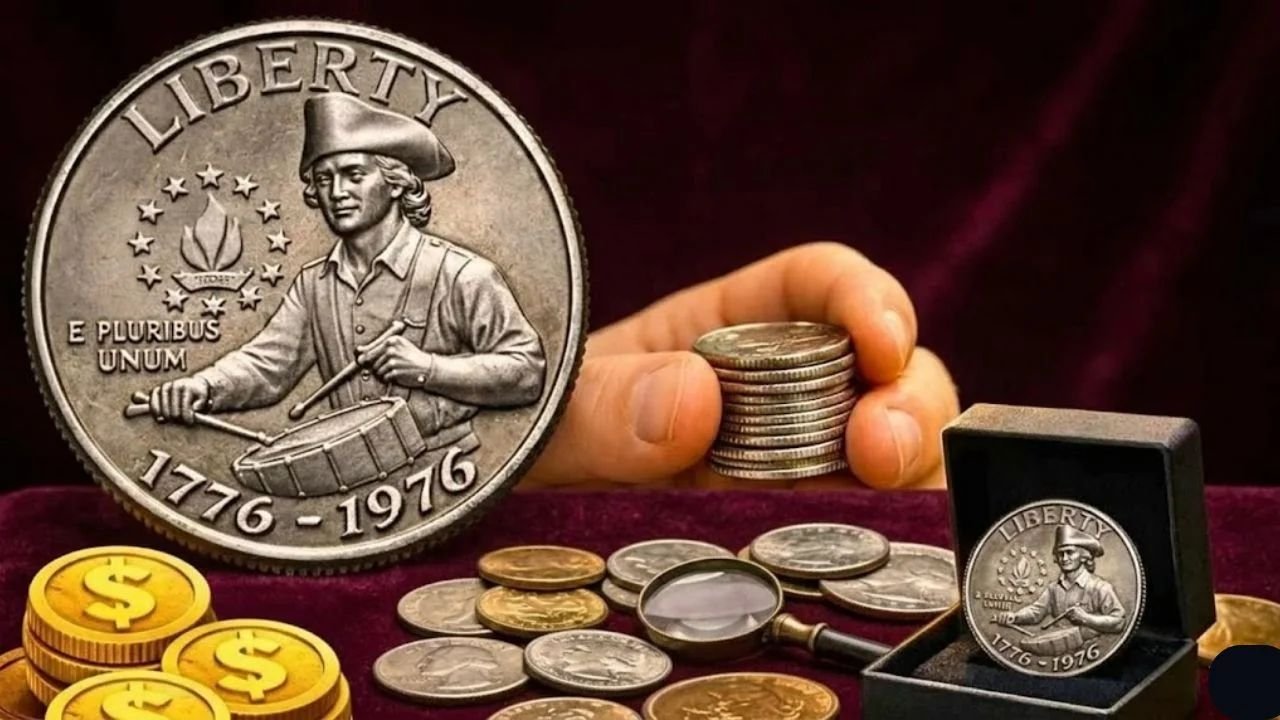
The 1976 Drummer Boy Quarter, officially known as the Bicentennial Washington Quarter, is one of the most iconic and collectible U.S. coins from the modern era. Minted to celebrate America’s 200th birthday, this coin features a striking design: George Washington on the front and a colonial drummer boy with a torch and thirteen stars on the reverse. While most quarters from 1976 are worth just 25 cents, certain rare and perfectly preserved examples have fetched staggering sums—up to $550,000 in extraordinary cases. This guide explores what makes these coins valuable, how to identify them, and current market trends in 2026.
Design and Historical Significance
The Bicentennial Quarter stands out immediately due to its reverse design by Jack L. Ahr. The drummer boy symbolizes youthful patriotism during the Revolutionary War, while the torch and thirteen stars honor the original colonies. The dual-date “1776–1976” marks the United States’ bicentennial, distinguishing this quarter from the regular annual issues. Collectors value the coin not only for its monetary potential but also for its cultural and historical resonance.
Mint Locations and Coin Types
The 1976 Drummer Boy Quarters were produced in massive quantities across multiple U.S. mints:
| Feature | Details |
|---|---|
| Official Name | Bicentennial Washington Quarter |
| Years on Coin | 1776–1976 |
| Designer | Jack L. Ahr |
| Mint Locations | Philadelphia (no mint mark), Denver (D), San Francisco (S) |
| Metal Types | Copper-nickel clad (circulation), 40% silver (special sets) |
| Total Minted | Over 1.6 billion |
| High-Value Varieties | Silver proofs, error coins, perfect grades |
| Regular Circulation | 25 cents |
While the majority of these coins are common and inexpensive, silver proofs, error coins, and exceptionally graded specimens command the highest market prices.
Factors Driving Value
Not every 1976 quarter is valuable, but certain characteristics can elevate a coin’s worth significantly:
- Mint Condition: Coins graded MS-67 or higher by professional services are extremely rare and sell for thousands.
- Mint Errors: Doubling, off-center strikes, or missing letters create collectible anomalies.
- Silver Content: 40% silver coins from special collector sets have intrinsic metal value above base copper-nickel versions.
- Proof Coins: Highly polished proof coins retain exceptional detail and demand premium prices.
- Error Varieties: Unique misprints or design anomalies can drive auction prices far above standard market levels.
- Original Surfaces: Never clean a coin—original surfaces preserve both numismatic and resale value.
Spotting a Silver 1976 Quarter
Identifying silver coins is straightforward:
- Edge Appearance: Silver quarters have a solid, consistent color, while copper-nickel clad coins show a layered “sandwich” appearance.
- Weight: Silver versions weigh slightly more—about 5.75 grams versus 5.67 grams for regular quarters.
- Mint Marks: San Francisco produced most silver proofs, denoted by an “S” mint mark. Philadelphia coins have no mint mark, and Denver coins carry a “D.”
Market Trends in 2026
Coin collecting in 2026 has a broad appeal, spanning generations. Social media platforms like TikTok and YouTube have introduced younger collectors to the hobby, sparking increased demand for rare coins. Online auctions make it easier to buy and sell, while silver content adds intrinsic value that fluctuates with commodity prices. High-grade Bicentennial Quarters, particularly silver proofs with minimal wear or errors, are experiencing notable price growth. While $550,000 coins are extreme outliers, coins in MS-65 to MS-67 grades can already command thousands in the marketplace.
Tips for Collectors
- Get Professional Grading: Submit coins to PCGS or NGC to verify authenticity and condition.
- Inspect Carefully: Look for errors, unusual markings, and high luster.
- Avoid Cleaning: Cleaning destroys value—preserve original surfaces.
- Educate Yourself: Learn the difference between circulation coins, proofs, and error varieties.
- Track Market Activity: Monitor auctions, online sales, and dealer listings for pricing trends.
- Handle Properly: Always hold coins by the edges to avoid fingerprints and surface damage.
Frequently Asked Questions
Q: How can I tell if my 1976 quarter is silver?
A: Check the edge for a solid silver appearance and compare the weight. Silver proofs were primarily minted in San Francisco.

Q: What does no mint mark mean?
A: It indicates the coin was minted in Philadelphia. “D” = Denver, “S” = San Francisco.
Q: Is a shiny quarter worth more?
A: Condition matters. Mint-state coins may sell for tens or hundreds of dollars; top-grade MS-67 examples can reach thousands.
Q: Should I clean my quarter?
A: Never. Cleaning drastically reduces value.
Q: Where can I get my coin graded?
A: PCGS and NGC are trusted grading services. Membership or dealer submission is required, with associated fees.
Final Thoughts
The 1976 Drummer Boy Quarter exemplifies how coins can be both historical artifacts and potential collectibles of great value. While most quarters from this year are ordinary, a few rare silver proofs, error coins, or perfectly graded examples can achieve extraordinary prices. Collectors today—especially those exploring old coin jars, estate sales, or inherited collections—have a chance to uncover these hidden treasures. With knowledge, careful handling, and professional grading, the Bicentennial Quarter remains an exciting opportunity for hobbyists and investors alike. Happy hunting!