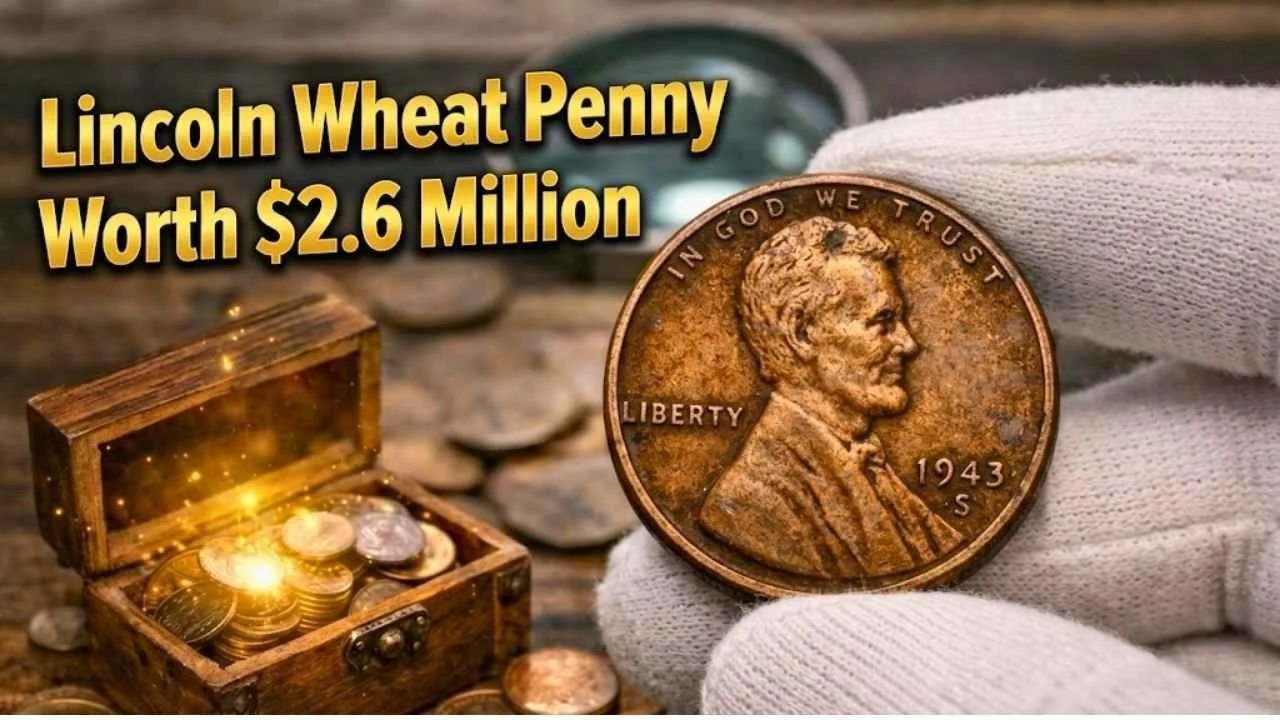
The Lincoln Wheat Penny has long been a cornerstone of American coin collecting. First minted in 1909 to honor Abraham Lincoln’s centennial birthday, it quickly became a fixture in circulation and a favorite for collectors. In 2026, a remarkable Lincoln Wheat Penny sold for $2.6 million, reigniting interest in this historic coin and proving that extraordinary finds can still emerge from old collections or loose change.
For both casual enthusiasts and serious collectors, this sale underscores the Wheat Penny’s enduring appeal. Beyond its monetary value, it represents a tangible link to American history and the evolution of U.S. coinage.
A Century of History
Designed by Victor David Brenner, the Lincoln Wheat Penny replaced the Indian Head Cent in 1909. Its obverse features Lincoln’s portrait, while the reverse displays two wheat stalks symbolizing prosperity. Minted until 1958, when the Lincoln Memorial design was introduced, the Wheat Penny spans nearly five decades of American history.
During its long production run, the series saw numerous varieties, mint marks, and rare errors, creating a rich field for collectors and investors alike.
Why Some Wheat Pennies Command Millions
While most Wheat Pennies are worth just a few cents or dollars, certain rare varieties stand out due to limited mintage, unique errors, or exceptional condition.
The 2026 $2.6 million sale involved one of the rarest known examples, combining scarcity with pristine preservation. Coins of this caliber are highly sought after for both their historical significance and investment potential.
Famous Rare Varieties
| Coin | Key Feature | Collector Appeal | Market Range* |
|---|---|---|---|
| 1909-S VDB | Designer initials on reverse | First-year issue, extremely rare | $100,000–$2,000,000+ |
| 1914-D | Low-mintage Denver issue | Rare in high grade | $50,000–$500,000 |
| 1922 No D | Missing Denver Mint mark | Minting error rarity | $20,000–$400,000 |
| 1943 Copper | Copper instead of steel | WWII error, historically significant | $500,000–$1,500,000+ |
| 1955 Double Die | Dramatic doubling on obverse | Iconic error coin | $50,000–$300,000 |
*Values depend on grade, certification, and provenance.
1909-S VDB
The 1909-S VDB Lincoln Wheat penny is among the rarest. With only 484,000 minted at the San Francisco Mint, high-grade examples are especially prized by collectors.
1914-D
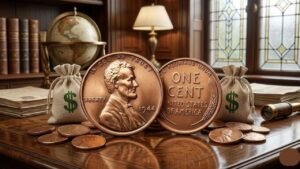
This Denver Mint coin is notable for its low mintage and scarcity in Mint State grades, making it a staple for advanced collectors.
1922 No D
A striking minting anomaly resulted in the omission of the Denver Mint mark. Surviving examples are extremely limited, making it a coveted rarity.
1943 Copper Penny
Most 1943 pennies were made of steel to conserve copper during World War II. A handful of copper examples were accidentally produced, turning them into legendary collector’s items.
1955 Double Die
The dramatic doubling of the obverse design makes this 1955 Double Die Lincoln Wheat penny a classic error coin with enduring popularity and high value.
Grading and Condition
Condition is a primary driver of value. Coins are graded from Poor (P‑1) to Mint State (MS‑70). High-grade, certified examples command substantial premiums, while heavily circulated coins are usually worth only face value. Provenance and documented history can further elevate prices, especially for record-breaking sales like the $2.6 million penny.
Market Trends and Collector Demand
Auction results highlight the Wheat Penny’s strong and sustained market. Rare examples continue to fetch six-figure sums, and exceptional pieces maintain global attention. In 2026, demand remains high, driven by both historical significance and investment potential.
The series appeals to beginners seeking accessible coins and to seasoned collectors hunting rare varieties and errors. Its popularity ensures that scarcity directly translates to value.
Preservation and Care
Proper handling and storage are critical. Collectors use gloves, protective holders, and climate-controlled environments to preserve coins. Cleaning is strongly discouraged, as it can irreversibly reduce value. Professional conservation is recommended for high-value or rare pieces to maintain both historical and financial integrity.
Final Thoughts
The Lincoln Wheat Penny is more than a collectible—it is a symbol of American history and craftsmanship. While most examples are common, rare varieties in pristine condition can reach extraordinary values, as demonstrated by the $2.6 million sale in 2026.
Whether discovered in a forgotten collection, inherited, or purchased at auction, Wheat Pennies continue to offer the thrill of hidden treasure and the opportunity to own a piece of history.