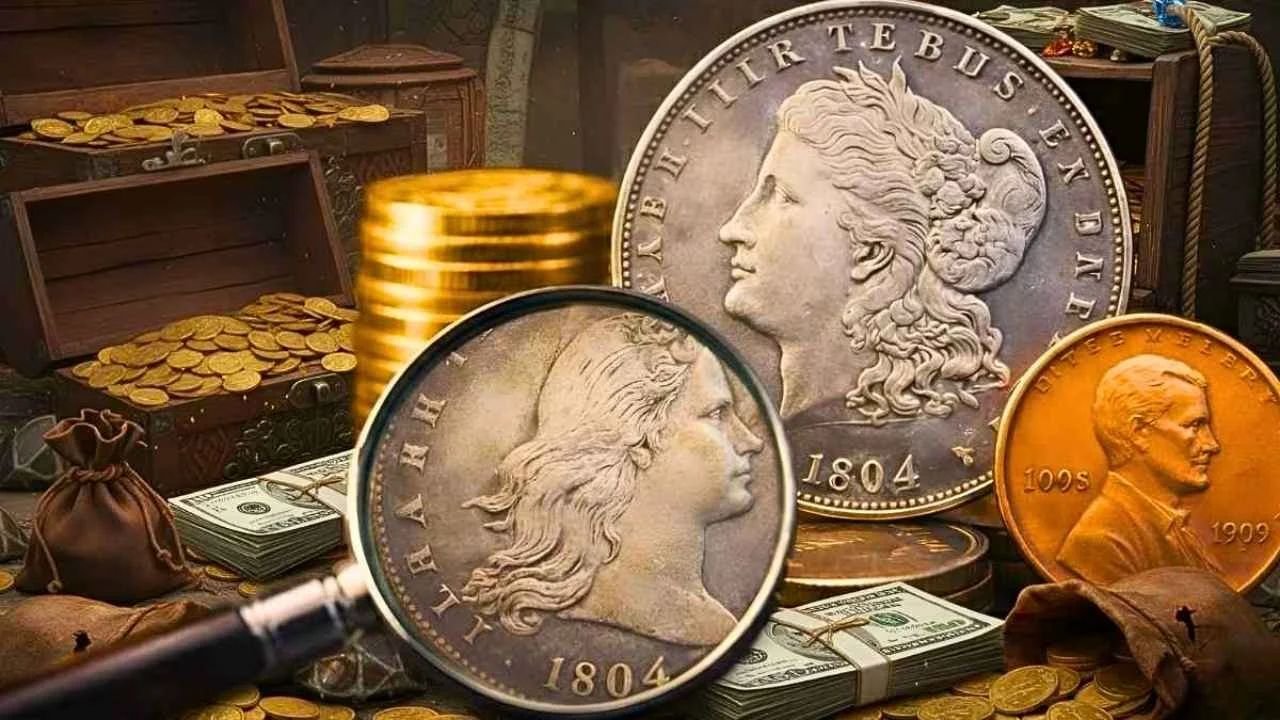
Rare U.S. coins continue to captivate collectors and investors alike in 2026. Certain historic coins have transcended their face value, commanding prices in the millions due to their scarcity, historical significance, and condition. For collectors, owning one of these coins is not just an investment—it’s holding a tangible piece of American history.
As interest in numismatics grows, the spotlight is on coins that have become legendary, from early silver dollars to error coins that were never intended for circulation. These million-dollar rarities represent the pinnacle of coin collecting, inspiring both seasoned collectors and enthusiasts who dream of adding one to their collection.
Why Million‑Dollar Coins Are So Valuable
Million-dollar coins combine rarity, historical importance, and artistry. Each piece tells a story, whether it was produced in limited numbers, struck under unusual circumstances, or preserved in exceptional condition. Collectors value them not only for their monetary worth but also for their cultural and historical significance. Owning such a coin is akin to holding a piece of American heritage.
Iconic U.S. Million‑Dollar Rarities
| Coin | Description | Estimated Value Range |
|---|---|---|
| 1794 Flowing Hair Silver Dollar | Considered the first silver dollar issued by the U.S.; pristine examples sell for over $10 million | $10M+ |
| 1933 Double Eagle | Gold coin never officially circulated; extremely rare | $7M–$18M |
| 1804 Draped Bust Dollar | Known as the “King of American Coins”; only a few high-grade examples exist | $4M–$5M |
| 1913 Liberty Head Nickel | Only five known; highly sought after by collectors | $3M–$5M |
| 1870‑S Seated Liberty Dollar | Extremely rare Seated Liberty variant | $1M–$3M |
These coins represent the ultimate achievements in American numismatics, prized for both their rarity and historical stories.
Condition, Grading, and Provenance
Condition is critical in determining whether a coin can reach million-dollar status. Coins are graded from Poor (P‑1) to Mint State (MS‑70):
- Circulated coins with heavy wear are valuable but rarely reach the million-dollar mark.
- High-grade examples, particularly those certified by PCGS or NGC, can command exceptional premiums.
- Provenance matters: coins with well-documented histories or links to famous collections often sell for higher amounts.
Collectors prioritize certified coins graded MS‑65 or above, ensuring authenticity and long-term investment potential.
Auction Performance and Market Trends
Auction houses continue to drive the market for million-dollar coins, setting record prices and establishing benchmarks.
- The 1794 Flowing Hair Silver Dollar recently sold for over $10 million.
- The 1933 Double Eagle consistently achieves multi-million-dollar results.
- The 1913 Liberty Head Nickel remains a headline coin whenever it appears at auction.
In 2026, competition for these rarities remains strong. Limited supply, growing collector interest, and historical significance all contribute to steady price appreciation.
Collector Demand and Investment Potential
Million-dollar coins appeal to a wide spectrum of collectors. For some, they represent the ultimate numismatic achievement; for others, a solid long-term investment. Even collectors unable to afford these coins study them closely, drawing inspiration from their histories and designs.
These coins are resilient against market fluctuations due to their scarcity and cultural value, making them not just collectibles but also long-term investments.
Preservation and Care
Maintaining the condition of million-dollar coins is essential. Proper handling and storage practices include:
- Using gloves and protective holders to avoid oils and scratches
- Storing coins in climate-controlled environments
- Avoiding cleaning, which can diminish value
- Considering professional conservation for rare and high-value pieces
Preservation safeguards both historical integrity and financial worth, ensuring these treasures endure for future generations.
Key Takeaways
- Million-dollar coins are prized for rarity, history, and artistry
- Iconic examples include 1794 Flowing Hair Dollar, 1933 Double Eagle, 1804 Draped Bust Dollar, 1913 Liberty Head Nickel, and 1870‑S Seated Liberty Dollar
- Grading, provenance, and condition are critical to value
- Auction results continue to break records and drive demand
- Proper preservation is essential to maintain value
Final Thoughts
The 2026 list of million-dollar U.S. coins highlights the most extraordinary pieces in American numismatics. These coins are more than currency—they are historical artifacts, investments, and symbols of a rich cultural legacy.
Whether admired in museums, studied in numismatic literature, or acquired at auction, these coins remind us that even the smallest pieces of metal can hold immense historical and financial significance. For collectors and investors alike, million-dollar coins remain the ultimate treasures.