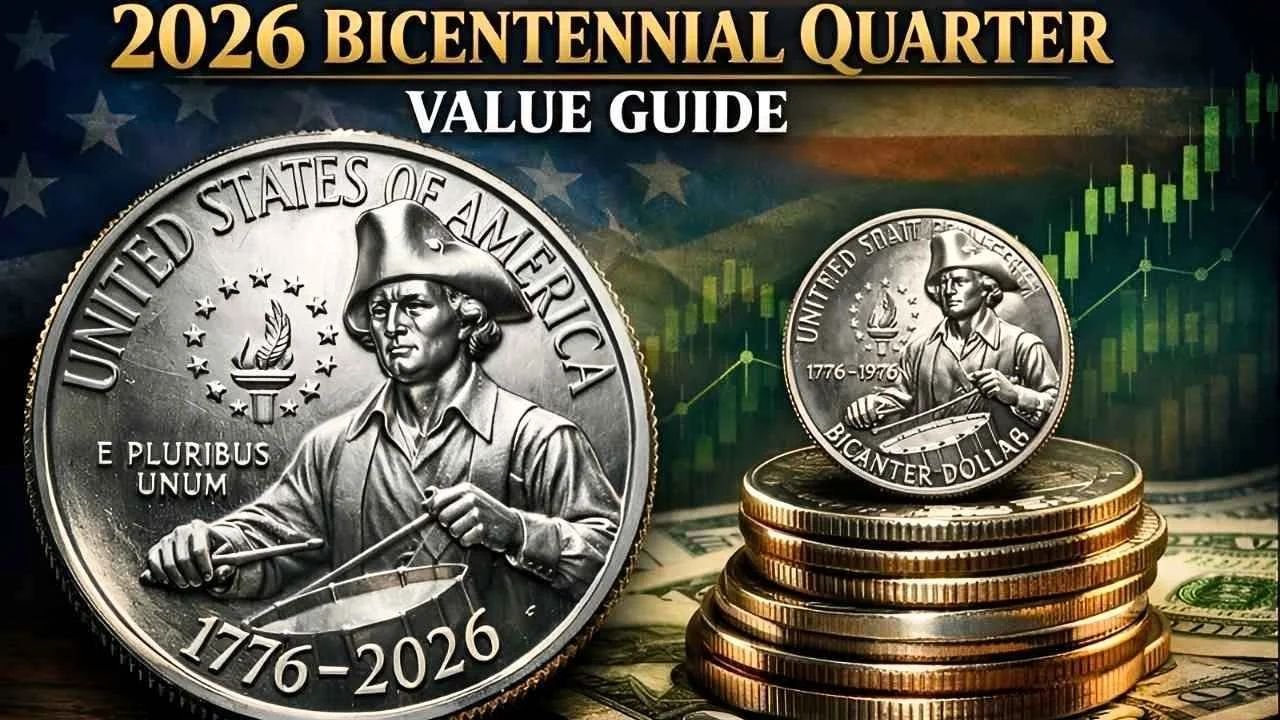
The Bicentennial Quarter remains one of the most celebrated coins in American history. Released in 1975 and 1976 to honor 200 years since the Declaration of Independence, this coin stands out with a design that diverges from the standard Washington quarter. While most examples are common, certain varieties, mint errors, and high-grade coins have become highly collectible, attracting strong interest in 2026. For collectors, discovering a rare Bicentennial Quarter can turn a simple coin into a prized treasure.
Millions of these coins entered circulation, but proof sets, silver issues, and unusual minting anomalies continue to surprise collectors. The combination of historical significance, visual appeal, and rarity makes the Bicentennial Quarter a standout in any collection.
Design and Composition
Obverse and Reverse
- Obverse: Features George Washington’s portrait, unchanged from the standard quarter design.
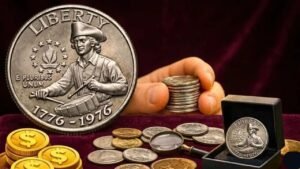
- Reverse: A colonial drummer boy with a torch, surrounded by 13 stars, representing the original colonies.
Composition and Mint Marks
- Circulation coins: Copper-nickel clad
- Collector coins: 40% silver for proof sets
- Mint Marks: P (Philadelphia), D (Denver), S (San Francisco)
Mintage Numbers
Although the Bicentennial Quarter was produced in massive quantities, some issues are rarer than others:
| Mint | Coins Produced | Notes |
|---|---|---|
| Philadelphia (P) | 809 million+ | Standard circulation |
| Denver (D) | 860 million+ | Standard circulation, high-grade examples are valuable |
| San Francisco (S) | Millions | Proof and silver issues, fewer than circulation strikes |
Rare Varieties and Minting Errors
1976-S Silver Proof
Struck in 40% silver, these proof coins are highly sought after, especially in pristine condition.
1976-D High-Grade Coins
Denver-minted circulation strikes are common, but flawless Mint State examples can fetch hundreds of dollars.
1976-S Clad Proof
San Francisco proof coins in copper-nickel clad are collectible, particularly in high-grade condition.
Minting Errors
- Double Die Errors: Doubling in the date or lettering creates scarcity and value.
- Off-Center Strikes: Coins misaligned during striking are visually striking and rare.
- Wrong Planchet Errors: Extremely rare examples struck on the wrong metal can reach high prices.
| Coin Type | Description | Approximate Value |
|---|---|---|
| 1976-S Silver Proof | Collector issue | $10 – $50+ |
| 1976-D High Grade | Mint State rarity | $50 – $500+ |
| 1976-S Clad Proof | Collector issue | $5 – $25+ |
| Double Die Error | Doubling in design | $100 – $1,000+ |
| Off-Center Strike | Misaligned strike | $200 – $1,500+ |
| Wrong Planchet Error | Struck on wrong metal | $1,000 – $5,000+ |
Collector Tips
- Check mint marks carefully, as they can drastically affect value.
- Proof and silver issues are typically more valuable than standard circulation strikes.
- Use magnification to detect doubling, off-center strikes, or unusual features.
- Store coins in protective holders to maintain condition.
- Consider professional grading for rare varieties to authenticate and enhance value.
Key Highlights
- Minted in 1975–1976 to celebrate the U.S. Bicentennial.
- Features a unique drummer boy reverse design with a torch and 13 stars.
- Rare varieties include silver proofs, high-grade coins, and mint errors.
- Condition, mint marks, and rarity are the main factors determining value.
- Collectors in 2026 continue to uncover surprising treasures among these quarters.
Final Thoughts
The Bicentennial Quarter is more than just pocket change—it’s a piece of American history and a symbol of national pride. While most coins remain common, rare proofs, high-grade strikes, and unusual errors can be worth hundreds or even thousands. In 2026, the thrill of finding one of these coins is as exciting as ever, making it a must-watch for collectors and investors seeking both historical significance and potential value.